
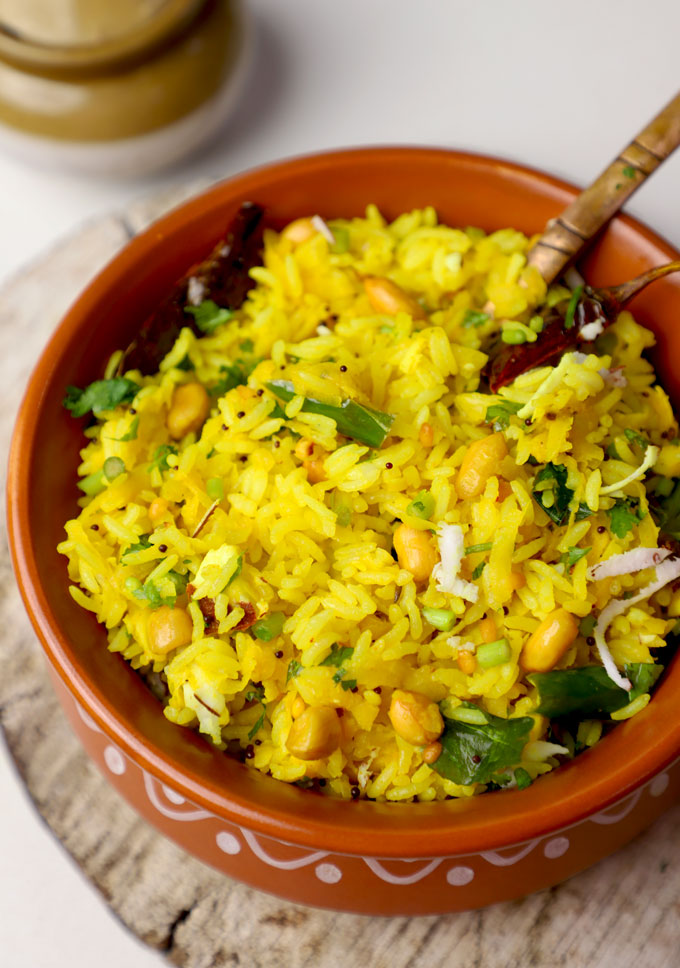
Mavinkayi Chitranna is a quintessential South Indian style mango rice. In Kannada, Mavinkayi means “raw mango” and Chitranna refers to “seasoned rice.”
Jump to:
Mango Rice is a masterclass in balancing the flavours of South India: the sourness of raw mango, the heat of green chilies, and the nutty crunch of roasted peanuts and the tempering. It is the seasonal superstar of the “mango showers” (pre-monsoon season) when tart, green mangoes are abundant.
What sets a great mavinkayi chitranna apart from a mediocre one is the texture of the rice and the perfect “tang” of the mango.
Key Components:
- The Rice: Must be “grain-separated.” Mushy rice is the enemy of Chitranna.
- The Mango: Peeled and grated coarsely. If you grate it too fine, it disappears into the rice; too thick, and you get sour “bites.”
- The Tempering: This is the heart of the dish, where mustard seeds, lentils, and aromatics create a crunchy base.
Are you a Rice lover?
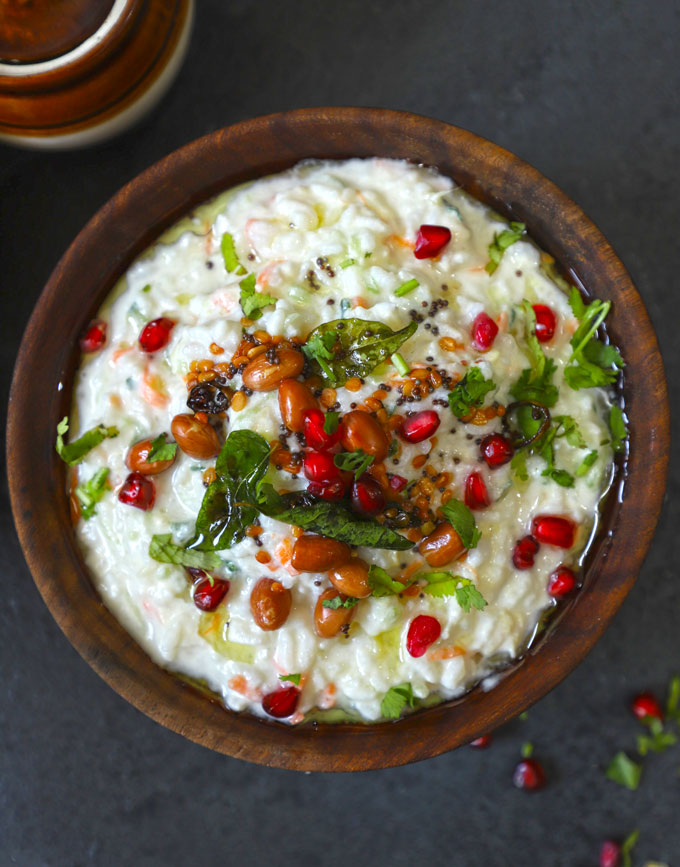
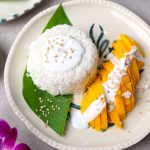
Do not confuse it with Mango Sticky Rice from Thailand. Both are different dishes. Mango Sticky rice is a dessert of ripe and sweet mangoes, coconut milk, and sticky rice. Whereas Chitranna is a savoury Indian dish of green (raw) mangoes and cooked rice.
Ingredients You’ll Need
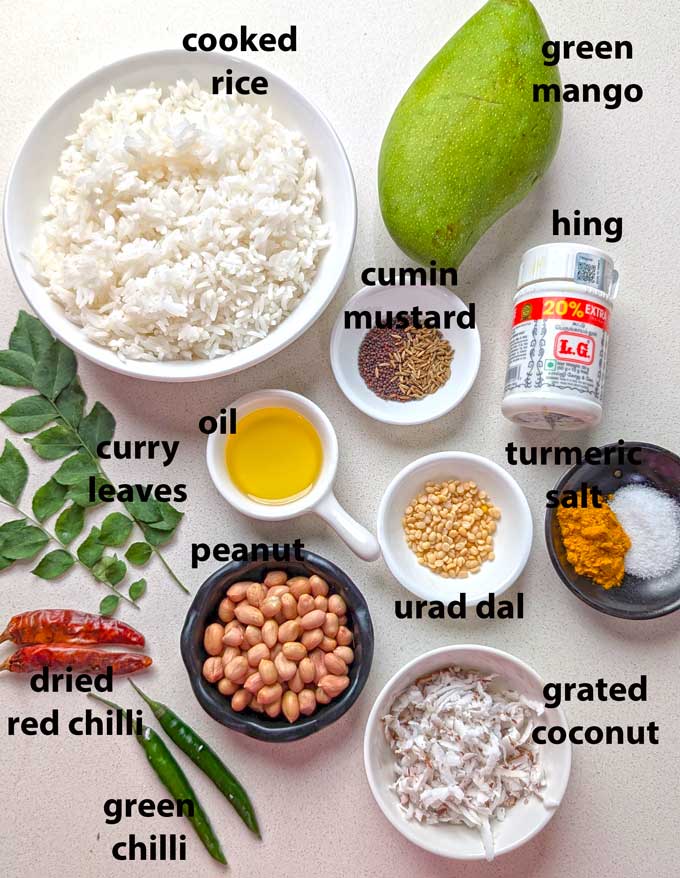
- Raw Green Mango (grated) that is firm and intensely sour—look for varieties like Totapuri or local wild mangoes.
- Cooked Rice preferably short to medium grain like Sona Masuri, cooked and cooled to room temperature. Leftover cooked rice is perfect for making dishes like Chitranna or lemon rice.
- Oil for tempering can be flaxseed, coconut, sesame seeds, groundnut oil, or the ghee.
- Aromatics: Curry Leaves, Fresh Ginger, Grated Coconut, Green Chilli, Coriander Leaves.
- Spices: Black Mustard Seeds (rai), Hing (Asafoetida), Turmeric Powder, Dried Red Chillies.
- Tadka (crunch factor): Peanuts, Chana Dal, White Split Urad Dal
How To Make Mango Rice
1. Prepare the Mango
- Peel, wash and grate the mango pulp. Discard the seed.
- Use the bigger holes of the grater for the purpose. If you grate it too fine, it disappears into the rice; chopped too thick, and you get sour “bites.”
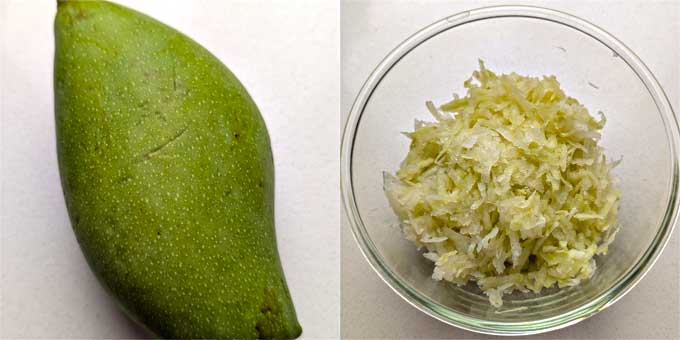
- Keep it aside. Meanwhile prepare the tadka.
2. The Golden Tempering (Tadka)
- Heat oil (or coconut oil) in a heavy-bottomed pan.
- Add mustard seeds and let them splutter. Next add white urad, chana, and peanuts. Fry on low heat until they turn golden brown and aromatic.
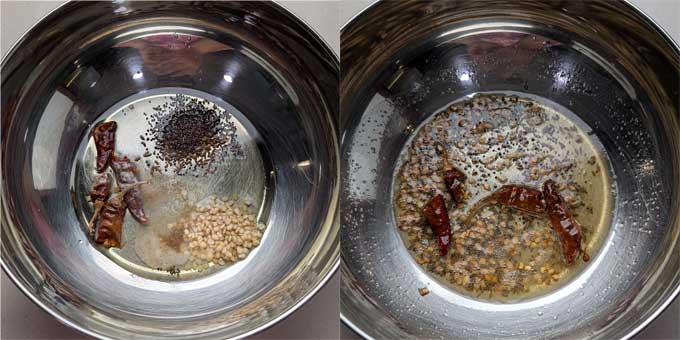
- Toss in the dried red chillies, green chilies, ginger, and curry leaves. Fry for a minute.
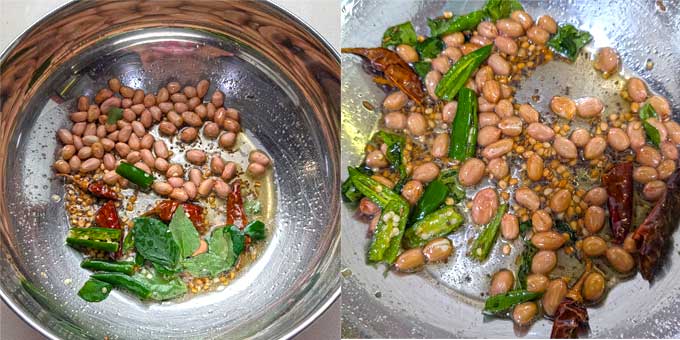
- Sprinkle the hing (asafoetida) and turmeric. The turmeric gives the dish its iconic sunshine-yellow hue. Mix nicely and cook for a few seconds to waft away the rawness of turmeric.
3. Sauté the Mango
- Add the grated raw mango to the tempering. Sauté for just 2 minutes.
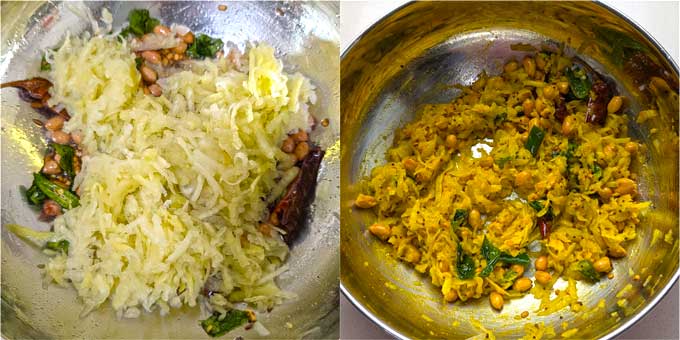
- You don’t want to cook the mango into a pulp; you just want to take the raw “edge” off and let it absorb the spices. Add salt at this stage.
4. The Final Fold
- Turn off the heat. Add the cooked and cooled rice to the tadka pan.
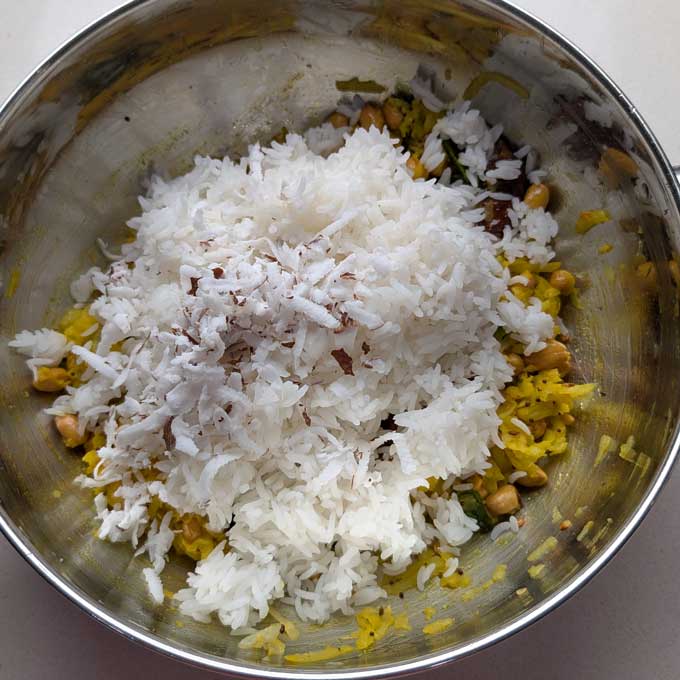
- Using a light hand or spatula, fold the mango mixture into the rice until every grain is coated in yellow.
- Top with a generous handful of chopped coriander and freshly grated coconut. The coconut provides a creamy sweetness that balances the sharp acidity of the mango.
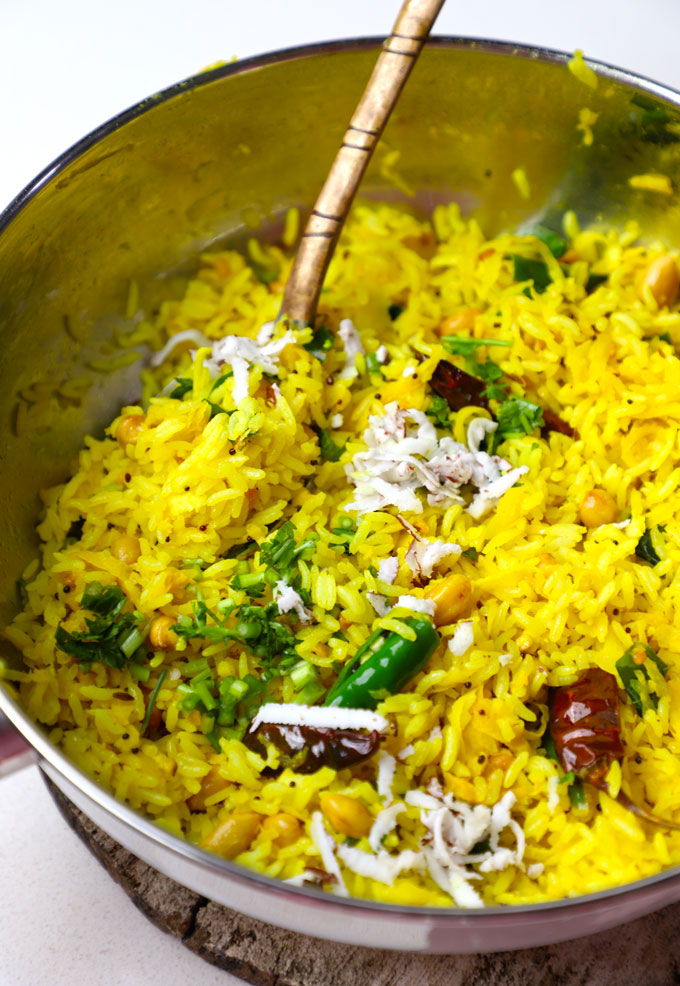
Serving Suggestion
Mango Rice is traditionally served at room temperature especially during the summer season. It is a staple for:
- Lunch Boxes: It travels incredibly well and doesn’t spoil easily due to the acidity of the mango.
- Festivals: A must-have during Ugadi (the Hindu New Year). In many temples across South India it is given as prasad (naivedyam).
- Sides: Pairs perfectly with fried papadum, masala potatoes, buttermilk, or a simple Kosambari for a balanced meal.
Hina’s Tried and True Tips
- Check the Tartness: Not all mangoes are created equal. Taste your grated mango first. If it’s extremely sour, use less; if it’s mild, add a squeeze of lemon at the end.
- Oil Matters: Don’t be shy with the oil. It acts as a carrier for the turmeric and prevents the rice from sticking together.
- The Crunch Factor: Add the peanuts toward the end of the tempering if you like them extra crunchy, or at the beginning if you prefer them slightly softened by the mango juices. And don’t miss out on the urad and chana dal for the tadka.
Here are a few more Indian dishes for you to try with green mango – refreshing aam panna, tangy and spicy mango chutney, chunda, pickle, or launji.
follow us on Youtube and Instagram for video recipes.
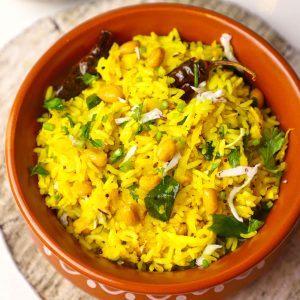
South Indian Mango Rice Recipe
- Food Processor or Grater
- Heavy Bottom Kadhai
Ingredients
- 2 Cup plain cooked rice
- 1 large green mango (kachhi kairi), grated
- 2 tablespoon sesame oil
- 1 teaspoon mustard seeds (rai)
- 1 teaspoon white urad dal (dhuli urad)
- 1 teaspoon chana dal (Bengal Gram)
- ¼ teaspoon cumin seeds (jeera) optional
- a pinch of asafoetida (hing)
- 4 dried red chilies
- 2 sprig curry leaves
- ¼ cup peanuts
- 1 teaspoon turmeric powder
- ½ teaspoon salt or to taste
- 2 green chilies, sliced
- ⅛ Cup fresh grated coconut
- Handful of coriander leaves, chopped
Instructions
- Peel, wash and grate the mango pulp. Discard the seed. Keep it aside. Meanwhile prepare the tadka.
- Heat oil (or coconut oil) in a heavy-bottomed pan.
- Add mustard seeds and let them splutter. Next add white urad, chana, and peanuts. Fry on low heat until they turn golden brown and aromatic.
- Toss in the dried red chillies, green chilies, ginger, and curry leaves. Fry for a minute.
- Sprinkle the hing (asafoetida) and turmeric. The turmeric gives the dish its iconic sunshine-yellow hue. Mix nicely and cook for a few seconds to waft away the rawness of turmeric.
- Add the grated raw mango to the tempering. Sauté for just 2 minutes. You don’t want to cook the mango into a pulp; you just want to take the raw “edge” off and let it absorb the spices. Add salt at this stage.
- Turn off the heat. Add the cooked and cooled rice to the tadka pan. Using a light hand or spatula, fold the mango mixture into the rice until every grain is coated in yellow.
- Top with a generous handful of chopped coriander and freshly grated coconut.
- Mango Rice is traditionally served at room temperature especially during the summer season.
Recipe Notes:
- Using leftover rice from the night before actually works best as it has less moisture!
- Use the bigger holes of the grater for the purpose. If you grate it too fine, it disappears into the rice; chopped too thick, and you get sour “bites.”


Leave Your Rating & Comment