
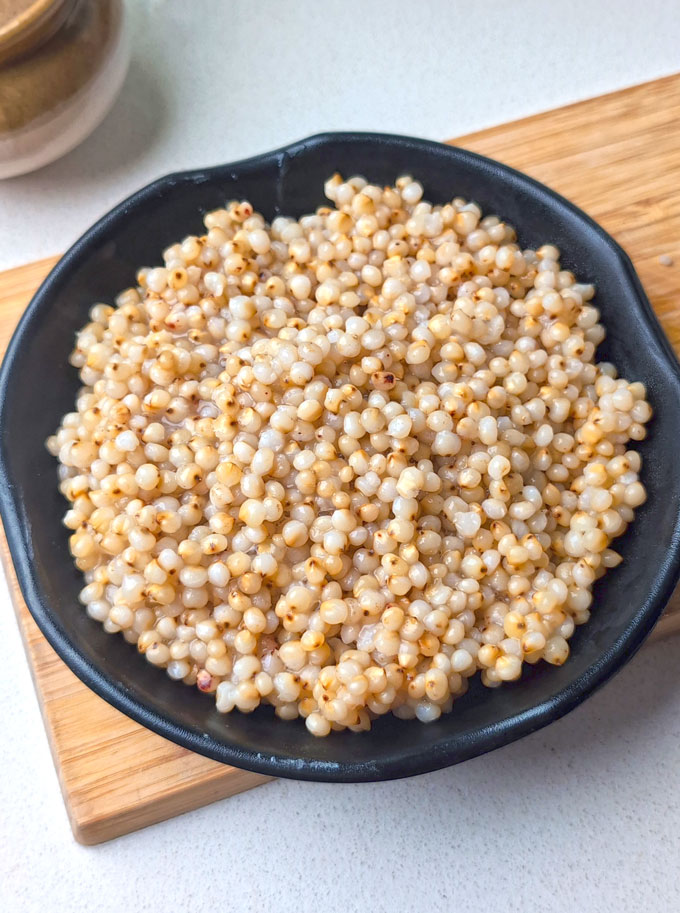
Whole Jowar (sorghum) is a nutritious, gluten-free ancient millet however, because of its dense outer bran, wrong cooking method often leads to tough, undercooked grains. Here is a detailed guide about how to cook jowar perfectly each time.
Jump to:
What is Jowar?
Jowar, globally known as sorghum, is an ancient millet belonging to the grass family Poaceae. Native to Africa and widely cultivated across India. It has a round, pale grain with a mild, slightly sweet, and nutty flavour profile.
Key Health Benefits:
- Naturally Gluten-Free: Excellent alternative for individuals with wheat allergies.
- Low Glycemic Index (GI): Preventing rapid blood sugar spikes.
- Supports Digestive Health: Good for gut health.
- Heart-Friendly: Help lower LDL (“bad”) cholesterol levels and promote cardiovascular health.
Pressure cooking is the fastest way to get tender, separate grains perfect for upma, salads, and pulao.
Key Ratios and Settings
| Parameter | Specification |
| Rinsing | 2 to 3 times or until water runs clear |
| Soaking Time | 12 to 24 hours (longer duration recommended) |
| Water-to-Grain Ratio | 1:3 (1 cup soaked jowar to 3 cups water) |
| Pressure Cooke | 6 to 7 whistles on medium to low flame |
| Pressure Release | Allow the steam release naturally |
Step-by-Step Cooking Process
1. Rinse and Soak:
- Rinse whole jowar 2 – 3 times under running water to remove surface starch.
- Drain and cover with fresh water. Soak minimum 12 hours and maximum 24 hours (change soaking water every 8 hours). Otherwise, the water will start fermenting and developing bacteria.
Hina’s Pro Tip: Soaking breaks down complex starches, reduces cooking time, and improves digestibility.
2. Pressure Cook:
- Drain the soaked water completely.
- Transfer the soaked jowar to a pressure cooker and add 3 cups of fresh water, ¼ teaspoon salt, and ½ teaspoon cooking oil or ghee.
- Close the lid and cook on medium flame for minium 6 whistles and maximum 8 whistles.
3. Rest and Fluff:
- Turn off the heat and allow the pressure to drop naturally before opening the lid.
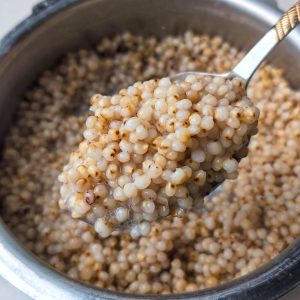
- Open the lid and check a grain—it should be tender with a pleasant bite.
- Pour the cooked jowar into a fine-mesh colander to drain any excess water. Spread the grains on a wide plate and gently fluff with a fork.
- Let them cool for 10 minutes before using in dishes.
After this step, you can use cooked jowar to make upma, pulao, soup, salad, or serve as a side dish in a healthy meal bowl.
Watch Video
Hina’s Tried and True Tips
- Add Oil/Ghee During Cooking: Adding ½ teaspoon of oil prevents the water from frothing into the whistle and keeps individual grains distinct for salads or pulao.
- Do Not Skip Soaking: Unsoaked jowar will remain rubbery even after 10+ whistles in a pressure cooker.
- Coarse Pulse for Upma: If using jowar for upma, you can coarsely pulse the soaked (and dried) grains in a blender once or twice before pressure cooking to mimic the texture of coarse rava or broken wheat.
- Batch Cooking & Storage: Cooked jowar stays fresh in an airtight container in the refrigerator for up to 4 days or in the freezer for up to a month.
Looking for more millet recipes? Try this wholesome Millet Pongal, Millet Khichdi, Ragi Ambali, or Ragi Idli Dosa Batter.
follow us on Youtube and Instagram for video recipes.
How to Cook Jowar
Ingredients
- 1 Cup whole Jowar pearls (sorghum millet)
- 3 Cup water
- a pinch of salt
- ½ teaspoon cooking oil
Instructions
- Rinse whole jowar 2 – 3 times under running water.
- Drain and cover with fresh water. Soak minimum 12 hours and maximum 24 hours (change soaking water every 8 hours).
- Drain the soaked water completely. Transfer the soaked jowar to a pressure cooker and add 3 cups of fresh water, ¼ teaspoon salt, and ½ teaspoon cooking oil or ghee.
- Close the lid and cook on medium flame for minium 6 whistles and maximum 8 whistles. Turn off the heat and allow the pressure to drop naturally before opening the lid.
- Open the lid and check a grain—it should be tender with a pleasant bite.
- Pour the cooked jowar into a fine-mesh colander to drain any excess water. Spread the grains on a wide plate and gently fluff with a fork. Let them cool for 10 minutes before using in dishes.

Leave Your Rating & Comment