
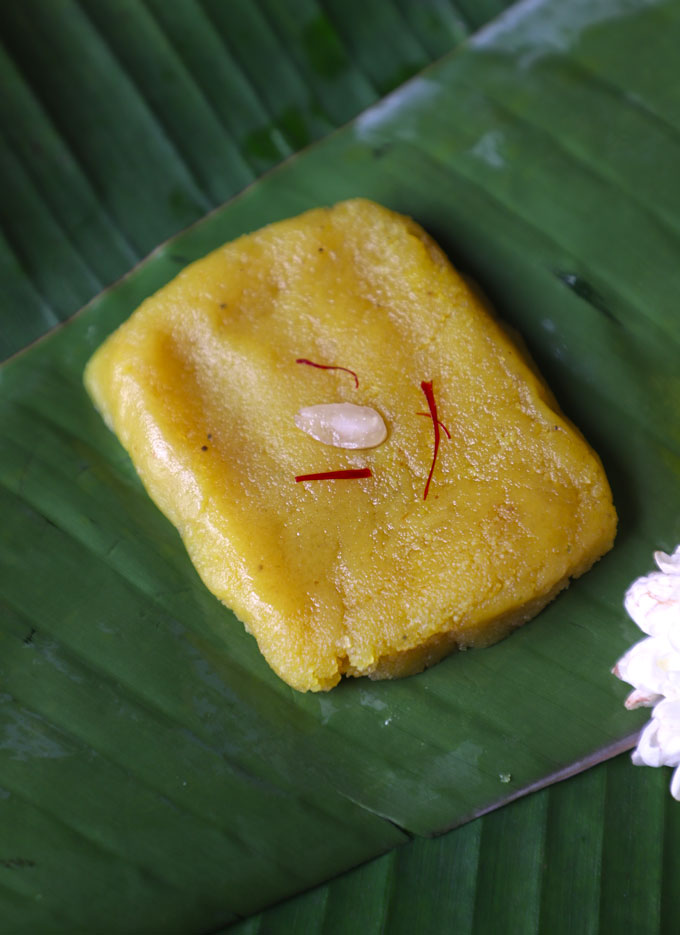
There are desserts, and then there is Badam Halwa— rich, aromatic, and loaded with warmth of saffron and ghee, it is a staple at Karnataka weddings.
Jump to:
If you want to bring the authentic royal flavour of Karnataka to your kitchen, this Badam Halwa is the right one to start with.
Unlike the North Indian variations that sometimes incorporate mawa or milk powder, the traditional Karnataka-style Badam Halwa (often reminiscent of the legendary ones served at heritage wedding feasts or Mangaluru/Mysore-style caterers) keeps it remarkably pure. It focuses entirely on the magic of freshly soaked almonds, pure ghee, fragrant cardamom, and a touch of saffron, cooked slowly to absolute perfection.
Why You Will Love This Recipe
- No Mawa or Milk Powder: The rich golden-yellow hue comes entirely from pure saffron and natural almond oils, with no shortcut milk powders or khoya.
- Melt-in-the-Mouth Texture: The slow-roasting process in ghee gives it a velvety consistency that coats your palate without feeling overly heavy.
- Make-Ahead Friendly: It stores wonderfully and makes for an impressive festive gift or offering (naivedyam) during celebrations like Deepavali, Ugadi, or weddings.
Ingredients You’ll Need
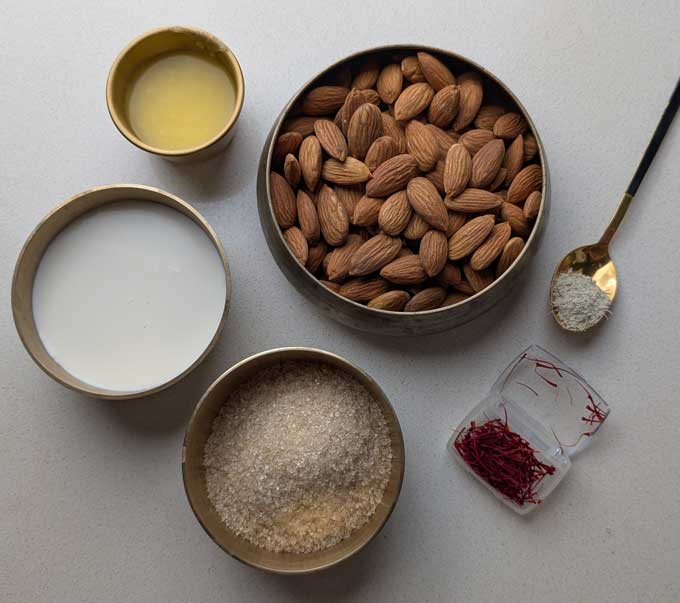
- Almonds (Badam), raw, unsalted, good quality almonds with oil like Mamra variety from India or the California Almonds.
- Sugar adjust based on your sweetness preference. I would not recommend adding jaggery to the halwa as it completely changes the texture and colour of the Halwa.
- Full Fat Milk to blend the blanched almonds.
- Ghee is essential for the royal richness, sweet taste, and gloss.
- Saffron Strands (Kesar) gives the golden hue to the halwa.
- Green Cardamom Powder for the aroma and taste.
How To Make Halwa
Step 1: Blanch and Peel the Almonds
- Soak: Bring about 2 cups of water to a boil, turn off the heat, and submerge the raw almonds in it. Cover and let them soak for 30 to 45 minutes (or overnight in room-temperature water).
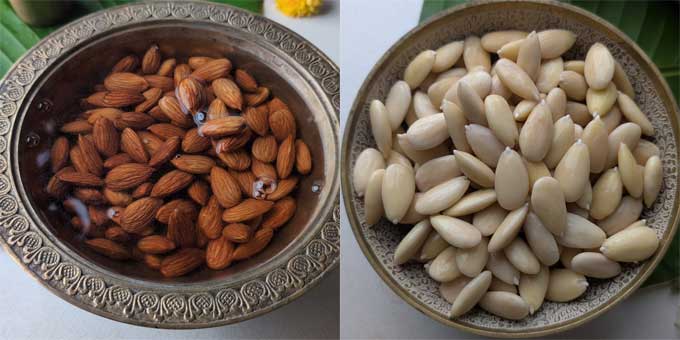
- Peel: Pinch the almonds gently; the skins will slip off effortlessly. Pat them completely dry using a clean kitchen towel to remove excess moisture.
Step 2: Grind into a Smooth Paste
- Transfer the peeled, dried almonds into a blender jar.
- Add milk (milk adds a creamier texture) and grind into a smooth, fine paste. Give paste a stir with spatula while blending to get the desired texture instead of adding too much milk or water.
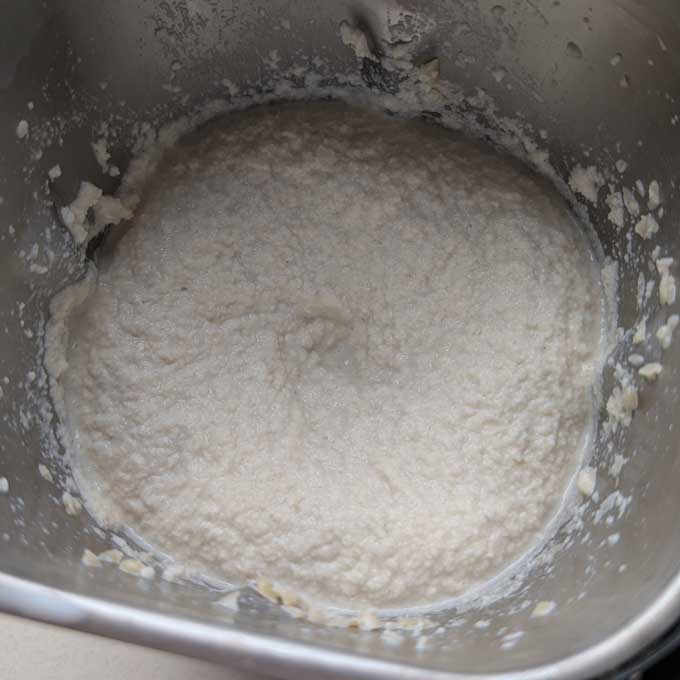
Tip: Avoid making it too coarse, as traditional Karnataka-style halwa has a silky-smooth, uniform mouthfeel.
Step 3: Bloom the Saffron
- Using mortar and pestle crush the saffron strands slightly.
- Warm 2 tablespoons of milk slightly and add the saffron strands to it. Set it aside for 15 – 20 minutes so the saffron releases its rich yellow-orange colour and distinct fragrance.
Step 4: The Slow Cooking Process
- Melt Ghee: Heat a heavy-bottomed pan or kadai (a non-stick or heavy cast-iron pan works best to prevent sticking) on medium-low heat. Add about half of the ghee.
- Cook the Almond Paste: Pour in the ground almond paste. Immediately switch the flame to low and stir continuously using a wooden or silicone spatula. This requires patience and time.
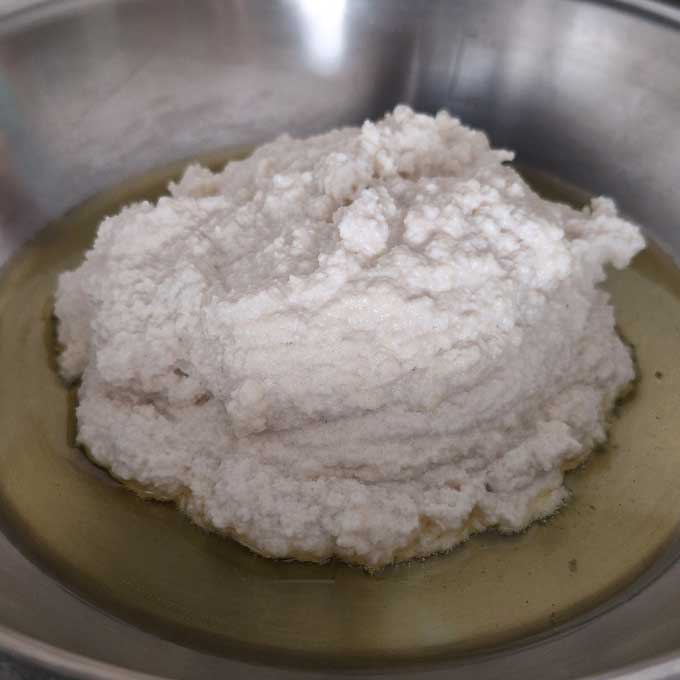
- Prevent Lumps: When the paste hits the pan, it might form small lumps. Whisk or stir vigorously with your spatula to break them down into a smooth, liquid batter.
- Stir Constantly: As the moisture evaporates, the mixture will begin to thicken. This requires patience—expect about 20 to 25 minutes of continuous stirring so the bottom doesn’t burn and the almonds paste gets even heat and cooking.
Step 5: Incorporate Sugar and Saffron
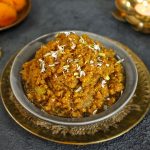
- Once the raw smell of almonds disappears, the mixture looks slightly glossy, thick and most importantly starts leaving the pan – add saffron infused milk, and cardamom powder. Cook for 10 minutes. The colour will instantly transform into a gorgeous golden-yellow.
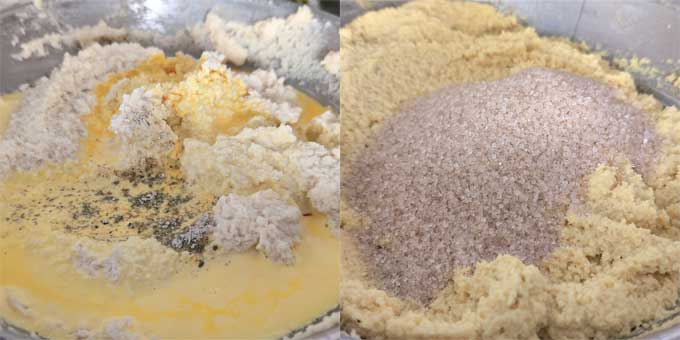
- Once all the liquid is evaporated and halwa starts coming together, add sugar. Stir to combine. As the sugar melts, the halwa will loosen up again into a flowing consistency. Keep stirring on low heat.
Step 6: Feed the Ghee and Finish
- Begin adding the remaining ghee one tablespoon at a time at regular intervals.
- Watch closely as the halwa absorbs the ghee, turns glossy, and starts leaving the sides of the pan.
- Turn off the heat once the halwa forms a cohesive mass that easily rolls off the spatula without sticking.
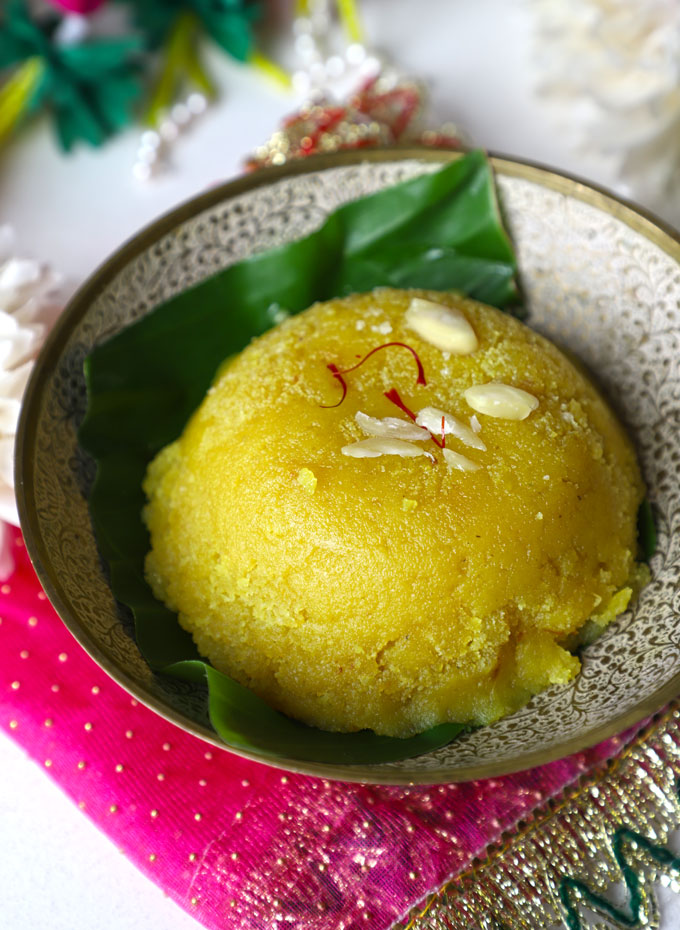
Top with sliced almonds and a few extra saffron strands.
Serve it warm in traditional brass bowls or small banana-leaf wraps for an authentic South Indian wedding feast vibe.
Watch Halwa Video
Hina’s Pro-Tips for Perfection
- Low and Slow is Key: Never rush badam halwa by turning up the heat. High heat will burn the bottom and give the dessert a bitter, scorched flavour.
- Heavy-Bottomed Vessel: Use a heavy iron or copper-bottomed kadai to ensure even heat distribution.
- Add Sugar towards the end. Once almond paste is nicely roasted and thick then only add sugar. After adding sugar it is difficult to cook the almond paste.
- Ghee Control: While traditional recipes are rich in ghee, you can adjust the final amount slightly, but don’t skimp too much—ghee is what gives the halwa its signature shine and shelf-life!
Love Halwa? Then you must try these traditional halwa recipes – wedding style Moong Dal Halwa, Pineapple Rava Kesari from South, or the no ghee Gajar Ka Halwa.
follow us on Youtube and Instagram for video recipes.
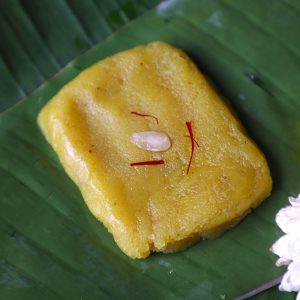
Karnataka Style Badam Halwa Recipe
- Mixer Grinder
- Heavy Bottom Kadhai
Ingredients
- 500 gram almonds (badam)
- 2 Cup full-cream milk (full fat milk)
- ¼ Cup ghee
- ⅓ Cup granulated white sugar
- 1 teaspoon green cardamom powder
- ¼ teaspoon saffron strands (kesar)
Instructions
Prep Work
- Bring about 2 cups of water to a boil, turn off the heat, and submerge the raw almonds in it. Cover and let them soak for 30 to 45 minutes (or overnight in room-temperature water).500 gram almonds (badam)
- Pinch the almonds gently; the skins will slip off effortlessly. Pat them completely dry using a clean kitchen towel to remove excess moisture.
- Using mortar and pestle crush the saffron strands slightly. Warm 2 tablespoons of milk slightly and add the saffron strands to it. Set it aside for 15 – 20 minutes.¼ teaspoon saffron strands (kesar)
Prepare Halwa
- Transfer the peeled, dried almonds into a blender jar. Add room temperature milk (milk adds a creamier texture) and grind into a smooth, fine paste. Give paste a stir with spatula while blending to get the desired texture instead of adding too much milk or water.2 Cup full-cream milk (full fat milk)
- Heat a heavy-bottomed pan or kadai (a non-stick or heavy cast-iron pan works best to prevent sticking) on medium-low heat. Add about half of the ghee.¼ Cup ghee
- Pour in the ground almond paste. Immediately switch the flame to low and stir continuously using a wooden or silicone spatula. This requires patience and time.
- As the moisture evaporates, the mixture will begin to thicken. This requires patience—expect about 20 to 25 minutes of continuous stirring so the bottom doesn’t burn and the almonds paste gets even heat and cooking.
- Once the raw smell of almonds disappears, the mixture looks slightly glossy, thick and most importantly starts leaving the pan – add saffron infused milk, and cardamom powder. Cook for 10 minutes. The colour will instantly transform into a gorgeous golden-yellow.1 teaspoon green cardamom powder
- Once all the liquid is evaporated and halwa starts coming together, add sugar. Stir to combine. As the sugar melts, the halwa will loosen up again into a flowing consistency. Keep stirring on low heat.⅓ Cup granulated white sugar
- Begin adding the remaining ghee one tablespoon at a time at regular intervals.
- Turn off the heat once the halwa forms a cohesive mass that easily rolls off the spatula without sticking. Top with sliced almonds and a few extra saffron strands. Serve badam halwa warm or at room temperature.


Leave Your Rating & Comment