
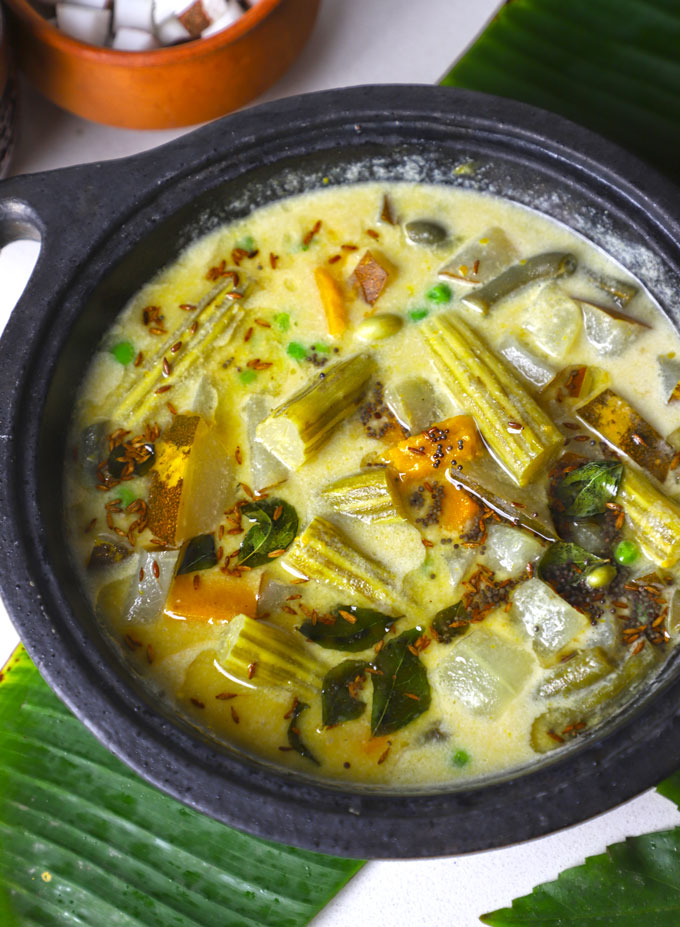
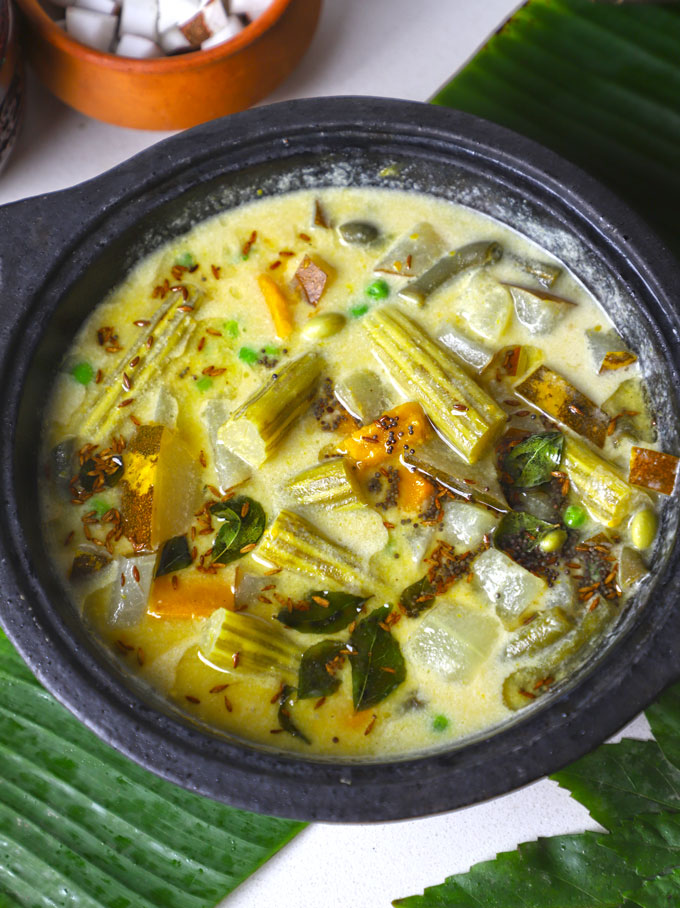
Valval (pronounced vuhl-vuhl) is a quintessential, sattvic Konkani vegetable stew simmered in a light, creamy homemade coconut milk base.
Jump to:
The Essence of Valval
Unlike many Indian curries that rely on heavy masalas or onion-tomato bases, Valval is subtle, creamy, and highlights the natural texture and taste of the vegetables. It is the ultimate comfort food for any festive Konkani meal.
The beauty of this Konkani stew lies in the medley of seasonal vegetables held together by a thick, velvety coconut gravy. It contains no turmeric, no chilli powder, and no onions or garlic—allowing the taste of fresh coconut to shine.
The Vegetable Selection
A traditional Valval usually includes at least seven to eight of the following local and seasonal vegetables:
| Vegetables | Substitution |
| Fresh Cashew Nuts | Use the regular dried cashew nuts |
| Yellow Pumpkin | Use green or orange pumpkin |
| Ash Gourd | Use bottle or ridge gourd |
| Snake Gourd | Use bottle or ridge gourd |
| Drumsticks | Essential for that distinct coastal aroma. |
| Green Beans | Use fresh SoyaBeans, French Bean, String, or Long Beans |
| Sweet Potato | Use regular potato or green banana for the starchiness. |
| Madras or Mangalore Cucumber | Use Zucchini or any other variety of squash |
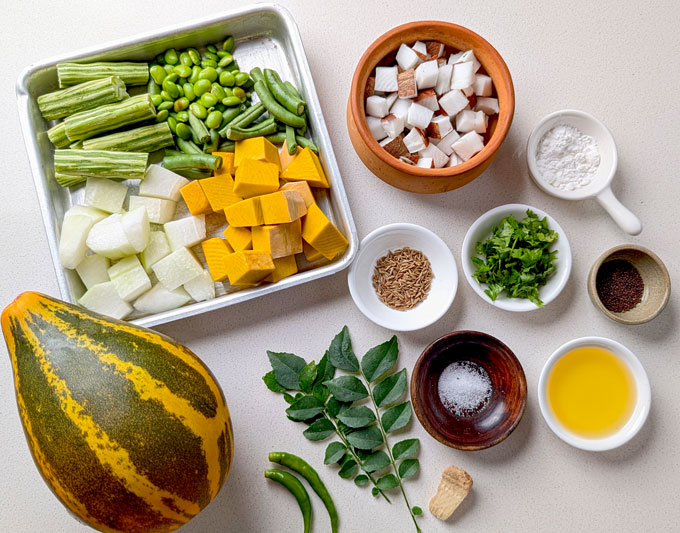
Ingredients You’ll Need
- Vegetables: I use a mix of ash gourd, yellow pumpkin, beans, peas, Madras cucumber and drumsticks.
- Fresh Coconut with brown skin to get the first and second extract (milk).
- Ginger and Green Chilli are optional seasoning but I like their subtle taste in Valval.
- Rice Flour to thicken the consistency of the stew.
- Tempering (Tadka): Coconut or Sesame Oil, Cumin Seeds, Mustard Seeds, and Curry Leaves.
- Salt to season, and water to cook the vegetables.
How To Make Valval
1. Prep the Vegetables
- Clean and dice all your vegetables into uniform cubes (about 1-inch) so that they all cook evenly around same time.
- If using cashews, soak them in warm water for 15 minutes.
2. Cook Vegetables
- Add vegetables in a kadhai with approximately ¼ Cup of water and salt. Add the tougher vegetables first (potatoes, drumsticks, cashews) and bring to a simmer. Once they are halfway cooked, add the softer vegetables (pumpkin, gourds).
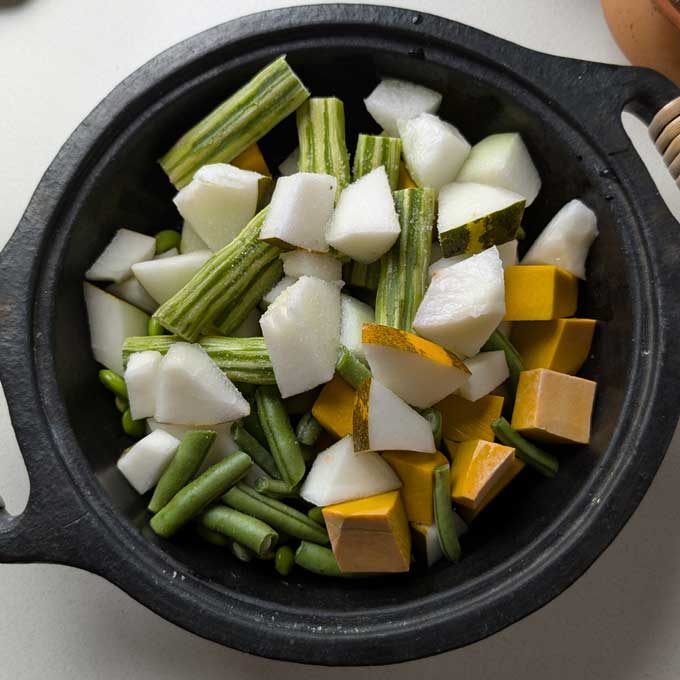
- Cover and cook them till they are al dente (fully cooked but has a crunch and texture). No need to add any spices at this stage.
- If you prefer, you can steam the vegetables.
3. Making Coconut Milk
- Soak freshly chopped coconut in lukewarm water for 15 minute to soften.
- Next, transfer the soaked coconut along with water, ginger, and green chilli to a blender. Add clean, drinking water and blend.
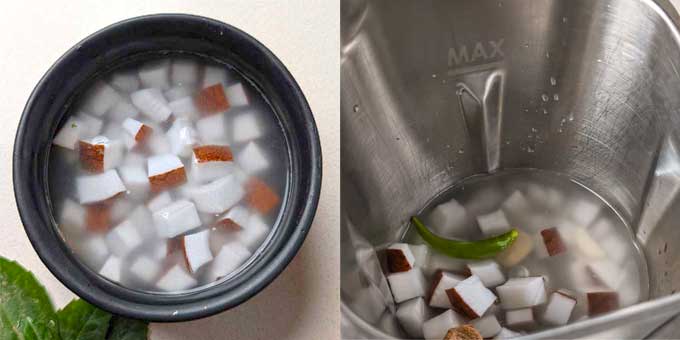
- Blend until you have a smooth paste.
The First Press: Strain this mixture through a cheesecloth or fine sieve. Squeeze hard to get the thick milk.
The Second Press: Put the coconut pulp back in the blender with another cup of water, blend again, and strain. Keep both the extracts separate.
3. Adding the “Milk”
- Mix a teaspoon of rice flour with a little coconut milk to make a slurry and stir nicely to avoid lumps. This gives the Valval its signature “glossy” look and creamy texture.
- Once all vegetables are fork-tender, turn the heat to low. Pour in the thin coconut milk (second extract) first along with rice flour slurry. Stir gently and let it heat through for just 2 – 3 minutes.
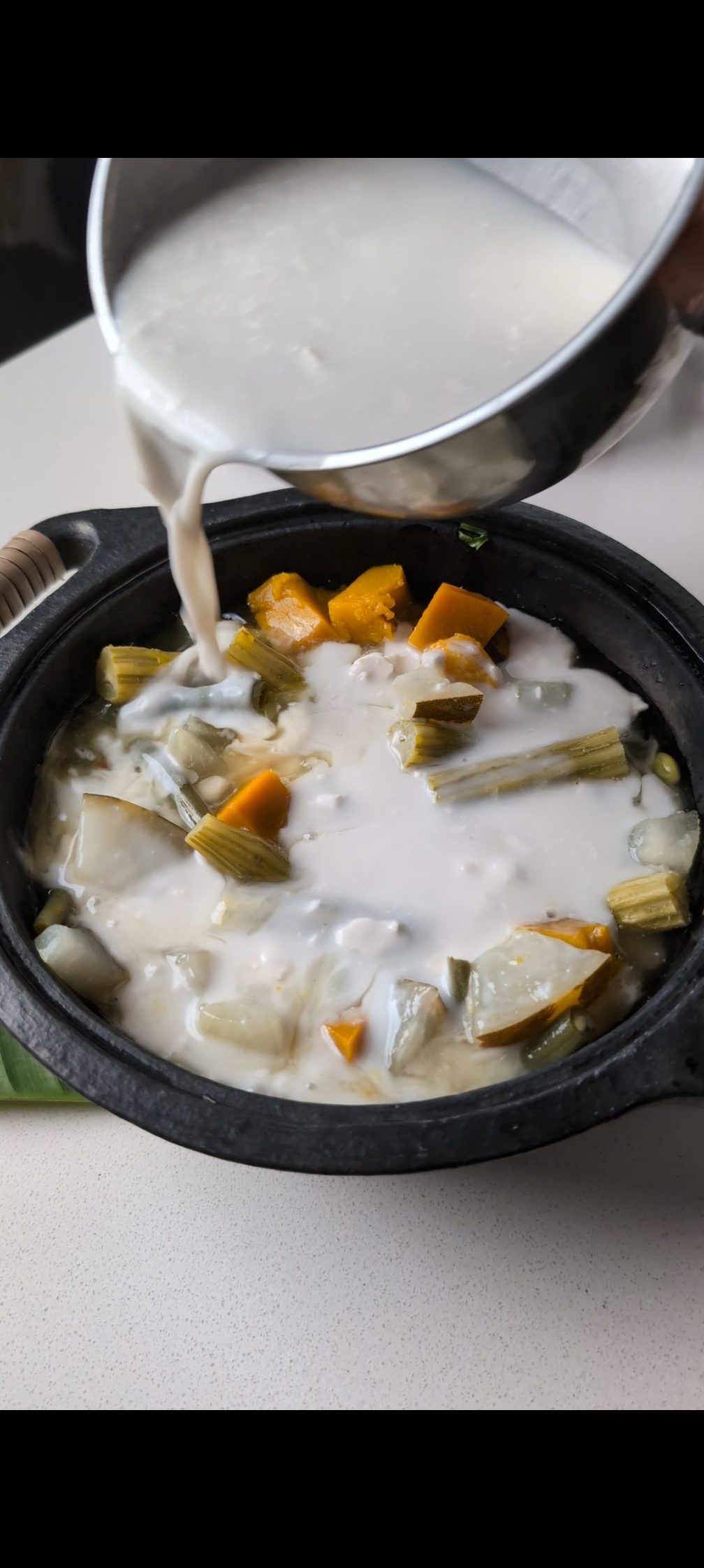
- Next add the thick, creamy coconut milk to give Valval the finishing touch.
Crucial: Do not let it boil vigorously after adding the thick milk, or it will curdle!
4. The Tempering (tadka)
- Heat oil in a small tadka pan. Add mustard seeds; once they pop, add the cumin seeds, and curry leaves.
- Pour this sizzling aromatic oil directly over the Valval. Cover the pot immediately to trap the aroma.
Serve Valval with steaming, hot rice and don’t forget to add a dollop of ghee right before serving.
Watch Valval Recipe Video
Hina’s Tried and True Tips
- Freshness Matters: Use freshly extracted coconut milk. The packaged versions often lack the natural creaminess and sweetness required for an authentic Valval.
- Don’t Overcook: The vegetables should be tender but hold their shape. A mushy Valval loses its visual appeal.
- The Oil: Use Coconut or Sesame Oil for the tempering. Any other oil will mask the authentic Konkani flavour profile.
Are you looking for a traditional summer recipes to beat the heat – try the comforting Cucumber Tambuli, cooling Sol Kadhi, gut friendly Rice Kanji, or the easy to digest Kairichi Kadhi.
follow us on Youtube and Instagram for video recipes.
Karwar Style Valval Recipe
- Blender
- Tadka Pan
- Heavy Bottom Kadhai
Ingredients
- 1 Cup yellow pumpkin, peeled and cut into cubes
- 1 Cup Mangalore cucumber, cut into cubes
- 1 Cup ash gourd, peeled and cut into cubes
- 4 – 5 green beans, cut into an inch long pieces
- ¼ Cup fresh soya beans (edamame)
- 1 large drumstick, peeled and cut into one inch pieces
- 1 tablespoon sliced cashews
- 1 medium fresh coconut, chopped
- 1 – 2 green chilli chopped
- ½ inch ginger, chopped
- 3 Cup water, divided
Ingredients For Tadka (Tempering):
- 1 tablespoon coconut oil
- 1 teaspoon black mustard seeds (rai)
- ½ teaspoon cumin seeds (jeera)
- 1 sprig curry leaves
Instructions
- Clean and dice all your vegetables into uniform cubes (about 1-inch) so that they all cook evenly around same time. If using cashews, soak them in warm water for 15 minutes.
- Add vegetables in a kadhai with approximately ¼ Cup of water and salt. Add the tougher vegetables first (potatoes, drumsticks, cashews) and bring to a simmer. Once they are halfway cooked, add the softer vegetables (pumpkin, gourds).
- Cover and cook them till they are al dente (fully cooked but has a crunch and texture). No need to add any spices at this stage.
- Soak freshly chopped coconut in lukewarm water for 15 minute to soften.Next, transfer the soaked coconut along with water, ginger, and green chilli to a blender. Add clean, drinking water and blend. Blend until you have a smooth paste.
- The First Press: Strain this mixture through a cheesecloth or fine sieve. Squeeze hard to get the thick milk.The Second Press: Put the coconut pulp back in the blender with another cup of water, blend again, and strain. Keep both the extracts separate.
- Mix a teaspoon of rice flour with a little coconut milk to make a slurry and stir nicely to avoid lumps. This gives the Valval its signature “glossy” look and creamy texture.
- Once all vegetables are fork-tender, turn the heat to low. Pour in the thin coconut milk (second extract) first along with rice flour slurry. Stir gently and let it heat through for just 2 – 3 minutes. Next add the thick, creamy coconut milk to give Valval the finishing touch.
- Heat oil in a small tadka pan. Add mustard seeds; once they pop, add the cumin seeds, and curry leaves. Pour this sizzling aromatic oil directly over the Valval. Cover the pot immediately to trap the aroma.
- Serve Valval with steaming, hot rice and don’t forget to add a dollop of ghee right before serving.

Leave Your Rating & Comment