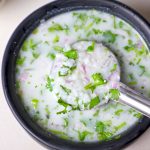
Rice Kanji Recipe
To handle the Indian summer, a bowl of Pazhaya Sadam (literally "old rice"), commonly known as Rice Kanji is one of the best natural probiotics.
Servings: 2 adults
Calories: 169kcal
Ingredients
- 1 Cup cooked rice
- 1 Cup water, at room temperature
- ½ Cup buttermilk (Indian Chaas)
- ¼ teaspoon salt or to taste
- 4 - 5 shallots (sambar onion)
- ½ inch ginger, chopped
- 1 green chilli, chopped (optional)
- 1 sprig curry leaves
- handful of fresh coriander leaves, chopped
Instructions
- Take your leftover cooked rice and place it in a clay pot (traditional) or a ceramic bowl.
- Add clean, drinking water until the rice is submerged by at least an inch.
- Cover it with a lid or a thin muslin cloth and leave it on your kitchen counter overnight (approx. 8–10 hours).
- The next morning, you’ll notice the water has turned slightly opaque, bubbly, frothy, and slightly tangy. Do not drain this water!
- Using clean hands, gently mash the rice into the water. The goal is to break the grains slightly to release the starches and create a slightly thick consistency.
- Whisk the buttermilk and stir it into the rice mixture. Add the crushed shallots, green chilli, and ginger. They provide a sharp, sweet crunch and are excellent for lowering body heat. Add chopped curry leaves, coriander leaves, and salt. Mix nicely.
- Serve rice kanji at room temperature.
Video
Notes
- Pro-Tip: The more potent the probiotic benefits—just ensure it smells fresh and fermented, not spoiled!
- Use non metallic, non reactive pot for soaking the rice for fermentation.
- Rice should not be warm or hot while soaking for fermentation nor it should be from the refrigerator. It should be cooled at room temperature before the soaking process.
- Don't use highly processed rice like basmati as they do not have enough nutrients or the starch.
- Rice Kanji is meant for eating fresh. Hence, this is not a fridge friendly recipe. Do not store kanji in the refrigerator.
- Best time to consume it is either breakfast or lunch.
Nutrition
Calories: 169kcal | Carbohydrates: 36g | Protein: 6g | Fat: 0.3g | Saturated Fat: 0.1g | Polyunsaturated Fat: 0.1g | Monounsaturated Fat: 0.1g | Cholesterol: 1mg | Sodium: 433mg | Potassium: 202mg | Fiber: 3g | Sugar: 8g | Vitamin A: 40IU | Vitamin C: 27mg | Calcium: 42mg | Iron: 1mg